GEO is the work of making a company’s material easy for generative search systems to retrieve, interpret correctly and use in an answer, ideally with a link to the source. The term comes from a 2023 research paper by researchers at Princeton and partner institutions (arXiv 2311.09735). It matters for companies whose buyers ask ChatGPT or Google’s AI Mode for suppliers, comparisons and prices. Demand for the service is visible in German-speaking Switzerland: in our September 2026 keyword research (Ahrefs data), “geo agentur” had about 250 searches a month. No one controls what an AI system says, so this page describes what we change and how we measure it.
Do you need special markup or “AI files” for Google AI Overviews?
No. Google states that there are no additional requirements to appear in AI Overviews or AI Mode and no special optimizations necessary, and that SEO best practices remain relevant (AI features and your website). Its guide to optimizing for generative AI features adds that no special schema.org markup, AI text files or llms.txt are needed for Google Search. For Google, GEO starts with crawlable pages and helpful, original content, which is why it sits on top of our SEO services.
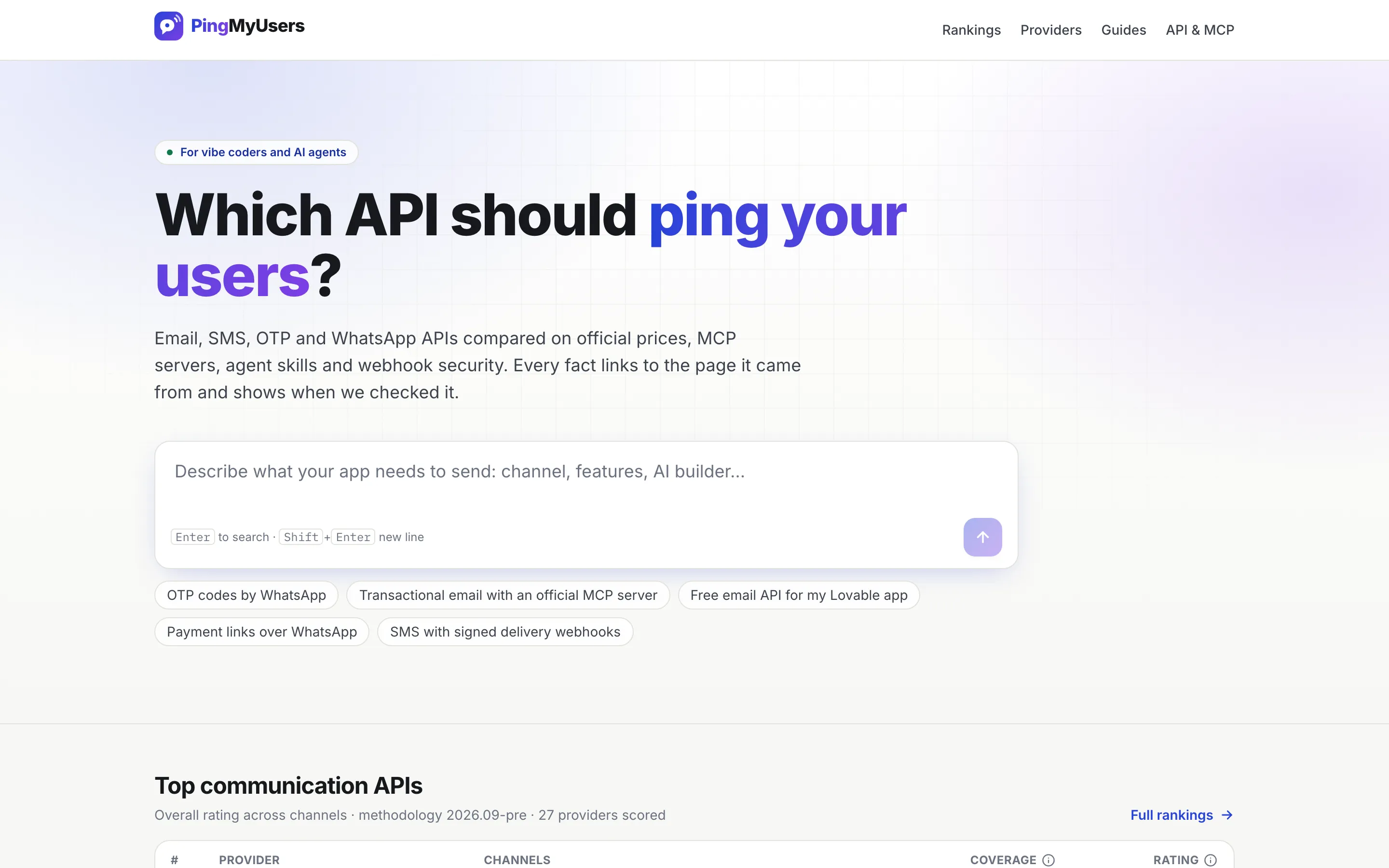
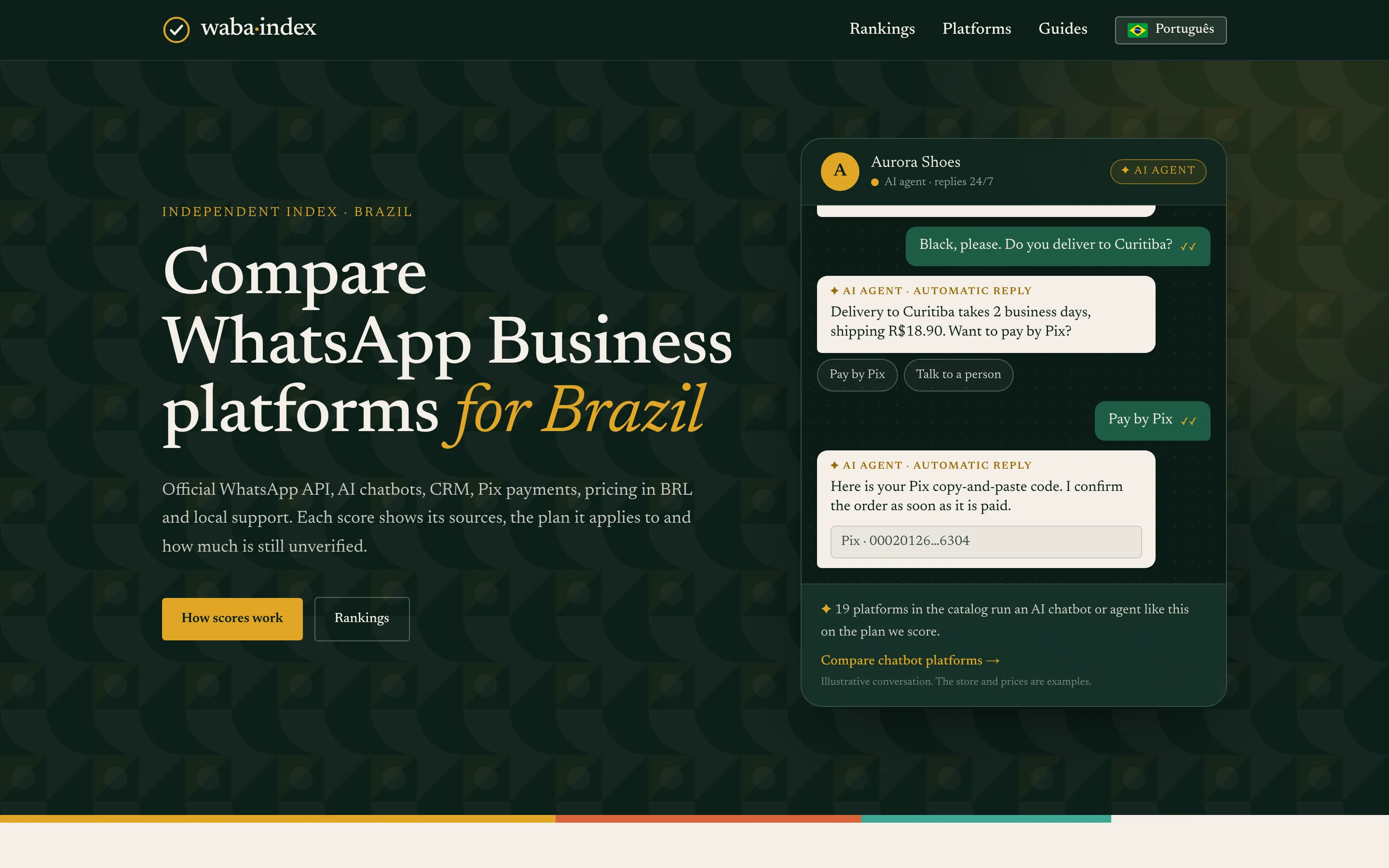
We have shipped llms.txt on PingMyUsers and WABA Index for the tools that read it. We don’t present it as a visibility lever.
How does query fan-out change what a page needs to cover?
Google describes AI Overviews and AI Mode as using query fan-out: the system issues several related searches across subtopics and data sources, then writes one answer from the results (Google Search Central). A page is therefore often retrieved for a sub-question, such as a price range, a compliance rule or a comparison, rather than for the head term. Pages that answer those sub-questions plainly, with dates and sources, give the system something it can use.
We research fan-out directly. For each topic we write five closely related versions of the buyer’s question and run them through OpenAI and Google Gemini models with web search enabled and the location set to the market you sell in. For every run we record the sub-queries the model issued, the pages it retrieved and the pages it cited in the answer. The sub-queries become page sections and FAQs; the cited pages show which kinds of source win.
Two findings from our September 2026 runs. On the question “what is GEO”, one engine cited only official documentation from Google, OpenAI and Perplexity plus research papers, while the other cited marketing blogs. Reddit pages were retrieved 120 times and never cited. In a run about web agencies in Lugano, English prompts produced Italian sub-queries. These runs go through the models’ APIs, so we treat them as directional, not as a measurement of Google’s own systems.
Can AI crawlers reach your site?
Each AI system uses its own crawler, and robots.txt rules apply per user agent. Blocking the wrong one removes a site from an answer engine without anyone noticing, and CDN bot protection can block crawlers that robots.txt allows. We check robots.txt, edge rules and actual server responses for these agents:
| User agent or token |
Operator |
What it is for |
Effect of blocking it |
| OAI-SearchBot |
OpenAI |
Finding pages to show in ChatGPT search |
Site is not shown in ChatGPT search answers |
| GPTBot |
OpenAI |
Collecting content for model training |
No training use; ChatGPT search is unaffected |
| ChatGPT-User |
OpenAI |
Fetching a page when a user asks for it |
robots.txt may not apply, since a user starts the request |
| PerplexityBot |
Perplexity |
Surfacing and linking sites in Perplexity search |
Site is not surfaced; Perplexity says the bot is not used for model training |
| Googlebot |
Google |
Crawling for Search, including AI Overviews and AI Mode |
Pages drop out of Search and its AI features |
| Google-Extended |
Google |
A robots.txt token for Gemini training and grounding |
No effect on inclusion or ranking in Google Search |
Sources: OpenAI crawler documentation, Perplexity crawler documentation, Google’s common crawlers. To limit what Google shows in AI features, the controls are snippet directives such as nosnippet and max-snippet, not Google-Extended.
Why does entity consistency matter?
AI systems put together what they know about a company from many pages. If the legal name, address, services and product names differ between your website, the commercial register, Google Business Profile, LinkedIn and directories, an answer can mix you up with someone else or leave you out.
We align these facts, mark them up with Organization schema and sameAs links to your official profiles, and keep product and service names identical across all language versions, so a German page about “Tessin” and an Italian page about “Ticino” clearly describe the same company.
What makes content usable in an AI answer?
Self-contained passages that answer one question, facts with a date and a source, comparison tables, clear authorship, and original material such as your own data, prices or process. Google’s guide advises writing from your own knowledge and experience, and notes that chasing inauthentic mentions is less helpful than it may seem.
For data-heavy products we go a step further: PingMyUsers publishes a REST API with an OpenAPI document and a read-only MCP server with 10 tools, so AI agents can query its facts instead of parsing pages. Writing and restructuring run through our content creation service.
How do you measure AI search visibility?
We combine four sources. Search Console’s generative AI performance report shows impressions and clicks from AI Overviews and AI Mode; Google introduced it in June 2026 and is rolling it out to a subset of sites. Everywhere else, AI feature traffic is included in the standard Web search type without a separate breakdown.
Analytics shows referrals from chatgpt.com, perplexity.ai and gemini.google.com. A fixed panel of prompts per language, rerun monthly, records whether the brand is mentioned, which URL is cited and whether the facts are right. Server or CDN logs show whether AI crawlers visit at all.
What we don’t promise or do
We don’t promise that your company will appear in ChatGPT, Gemini, Perplexity or Google’s AI answers; answers change with the user, the wording and the model version. We don’t add hidden text or instructions aimed at AI systems, don’t generate pages at scale to catch prompts, and don’t seed fake mentions or reviews. If a site isn’t crawlable and useful, there is nothing for an AI system to use.
Effort depends on the size of the site, the number of languages and topics, and how much off-site clean-up the entity work needs. After a short discovery call we send a fixed-price or phased proposal.