Email and SMS automation sends the right message when something happens in your business: an order, a booking, a sign-up, an unpaid invoice, a customer who hasn’t bought in months. Sensaria builds it for companies in Switzerland and abroad on the data you already have in the CRM, shop or your own application, so every message uses current information and stops when it should. We cover transactional email, campaigns, lifecycle sequences and SMS, plus the parts that decide whether mail arrives at all: consent records, domain authentication and bounce handling.
Which emails and SMS should you automate?
Automate every message that follows a predictable event and says roughly the same thing each time. Start with transactional messages, because customers expect them within seconds. Then add lifecycle emails such as welcome and onboarding, then trigger marketing such as abandoned-cart reminders. Keep campaigns for content that really changes from one send to the next.
| Type |
Examples |
Trigger |
Consent basis |
| Transactional |
Order confirmation, invoice, password reset, appointment confirmation |
Event in your system |
Not advertising, as long as it carries no promotion |
| Lifecycle |
Welcome, onboarding, renewal reminder |
Sign-up, first order, contract date |
Service information or advertising, depending on content |
| Trigger marketing |
Abandoned cart, back in stock, win-back |
Behavior or inactivity |
Consent or the existing-customer exception |
| Campaigns |
Newsletter, promotion |
Schedule |
Consent or the existing-customer exception |
| SMS |
Appointment reminder, delivery window, promotion |
Event or schedule |
Consent for anything promotional |
What do Swiss and EU rules require for email and SMS marketing?
In Switzerland, the Unfair Competition Act (UCA Art. 3 para. 1 let. o) requires prior consent for mass advertising by email, SMS and similar telecommunication, a correct sender and an easy, free opt-out in every message. Customers whose details you received through a sale may get advertising for your similar products or services without new consent, if they were offered an opt-out when you collected the details. The rule applies to B2B as well as B2C.
The Federal Data Protection and Information Commissioner summarizes the rules on its advertising page; complaints go to SECO. The revised FADP governs how the contact data itself is handled, and for recipients in the EU the GDPR and national e-privacy rules apply as well. We store consent as data: channel, status, source, timestamp and the text the person agreed to. The UCA does not prescribe double opt-in; we recommend it anyway, because it gives you proof when someone disputes a sign-up.
Deliverability: SPF, DKIM, DMARC and the bulk-sender rules
Mailbox providers filter on authentication and complaints, not only on content. Since February 2024, Gmail and Yahoo require senders of around 5,000 messages a day to their users to pass SPF and DKIM, publish a DMARC record (p=none at minimum) aligned with the From domain, offer one-click unsubscribe for marketing mail and keep reported spam below 0.3%. Microsoft has enforced similar authentication rules for Outlook.com since May 2025 and rejects bulk mail that fails them. Gmail moved to rejecting non-compliant traffic in November 2025.
What we set up:
- SPF, DKIM and DMARC for every service that sends in your name, with DMARC reports so you can see who does.
- Separate streams for transactional and marketing mail, for example on different subdomains, so a complaint spike after a newsletter doesn’t delay password resets.
- List-Unsubscribe headers with one-click support, and bounce and complaint handling that updates the suppression list automatically.
- A warm-up plan for new domains and sending addresses.
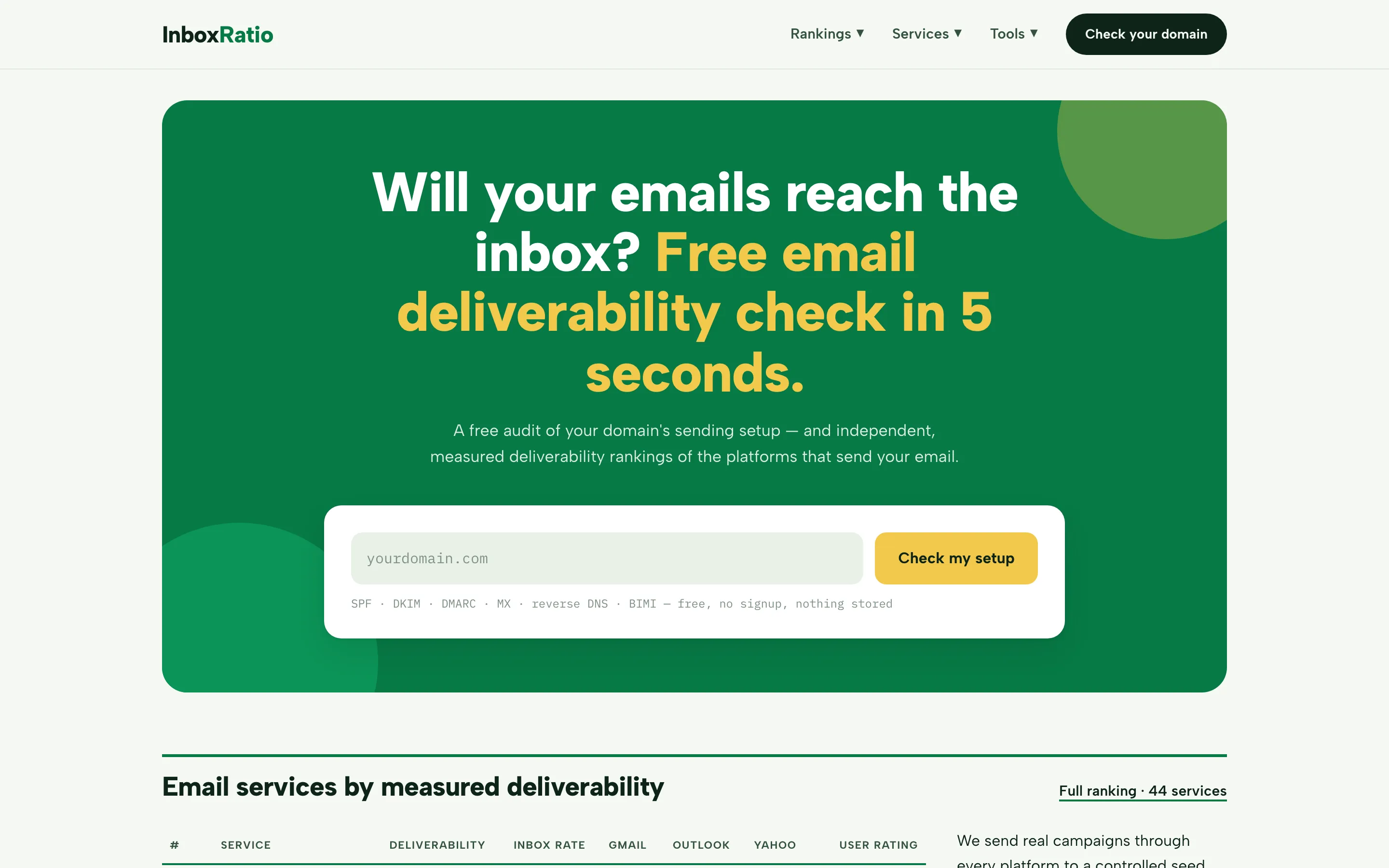
This is familiar ground. We built InboxRatio, whose 15 free tools check SPF, DKIM, DMARC, BIMI, reverse DNS and blocklists. Our outreach platforms run a DNS pre-flight check before go-live and use a warm-up ramp that freezes and steps back when the bounce rate rises.
Where SMS fits
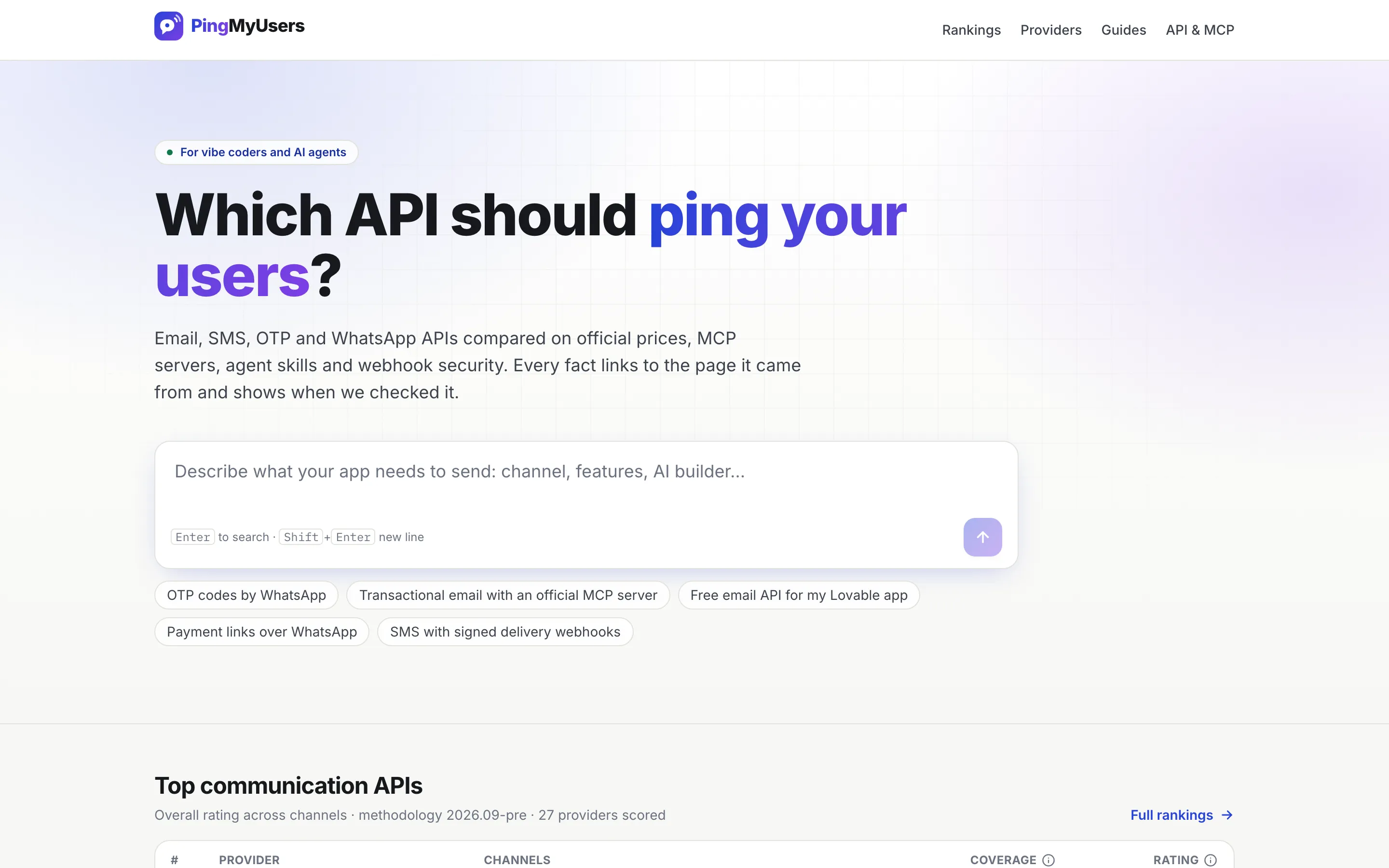
SMS gets read quickly and costs money per message, so use it for short, time-critical content: appointment reminders, delivery windows, pickup notices, verification codes. Promotional SMS falls under the same consent rule as email. We connect the SMS provider you choose through the same event layer as email, so both channels share consent and suppression data. To help with the choice, PingMyUsers, the directory of communication APIs we built, compares SMS, email and WhatsApp providers on sourced, dated facts.
Personalization that doesn’t break
Merge fields come from the CRM with fallbacks, so a missing first name never produces “Dear ,”. The language comes from the contact record, not from a guess. Templates are built in MJML so they render in Outlook as well as in Gmail and Apple Mail. Product blocks are filled from shop data at send time, so a sold-out item doesn’t appear. Every change goes to seed addresses before it goes to customers.
What drives cost and timeline
| Driver |
Why it matters |
| Message types and languages |
Each needs copy, a template and tests |
| Systems that trigger messages |
Shop, CRM, booking tool or your own app each need an integration |
| List and consent history |
Contacts without consent records can’t simply be imported into campaigns |
| Current deliverability |
A domain with a damaged reputation needs repair before volume |
| SMS |
Provider selection, sender ID setup and per-message costs |
| Reporting |
Delivery and engagement data written back to the CRM |
After a short discovery we send a fixed-price or phased proposal. Sending-platform and SMS fees are separate and depend on your volume.
How it connects
Email and SMS are the output channels for marketing automation and CRM automation. Order-driven messages depend on the data from your online shop, and events from other systems arrive through API integrations. For WhatsApp and chat, see AI chatbots and the customer communication solution.
Why Sensaria
We have written the sending side ourselves: SMTP sending with warm-up, IMAP reply and bounce tracking, suppression lists shared across instances, delivery status synced back from the email provider, and an MJML rendering pipeline. So we can tell whether a problem sits in your DNS, your list or your content. Sensaria AG is a Swiss company and works in English, Italian, German and French.