A business website earns its budget when it answers the questions buyers ask before they contact you, captures each inquiry with enough context to act on it, and shows which channels bring customers. Design decides whether a buyer trusts you enough to get in touch. But a well-designed site whose contact form drops messages into a shared inbox, with no source and no follow-up, still loses leads.
So our website projects start from the path a visitor takes to become an inquiry, and from what happens to that inquiry in the next ten minutes. A typical setup: a form submission creates a contact and a deal in your CRM with the landing page, campaign and UTM parameters attached, assigns an owner and starts a two-step follow-up.
Do you need a new website or a fix?
Not every underperforming site needs a relaunch. If the site is recent, the content is accurate and the real problem is that leads go missing, fixing forms, tracking and CRM routing takes days. A rebuild makes sense when the structure no longer matches what you sell, when editors can’t change a page without a developer, when a page builder makes the site slow on phones, or when you need languages, portals or data-driven pages the current platform can’t handle. We tell you which case you are in during discovery, before any proposal.
How we design and build it
Content model before visual design. We define page types, fields and relationships first: what a service page, a reference, a location or a product page must contain. Design then works with real copy for the key pages, so layouts hold up when the actual text arrives.
Stack chosen by who edits, and how often. For corporate and marketing sites we usually build with Astro or Next.js and keep content in Git as Markdown or MDX. Pages are pre-rendered, fast and hard to break, and every change has a history. Where several non-technical editors publish every day, WordPress with a short list of maintained plugins can be the better choice, and we are explicit about the updates it needs. Catalogs, comparisons and directories get a structured data layer that generates the pages.
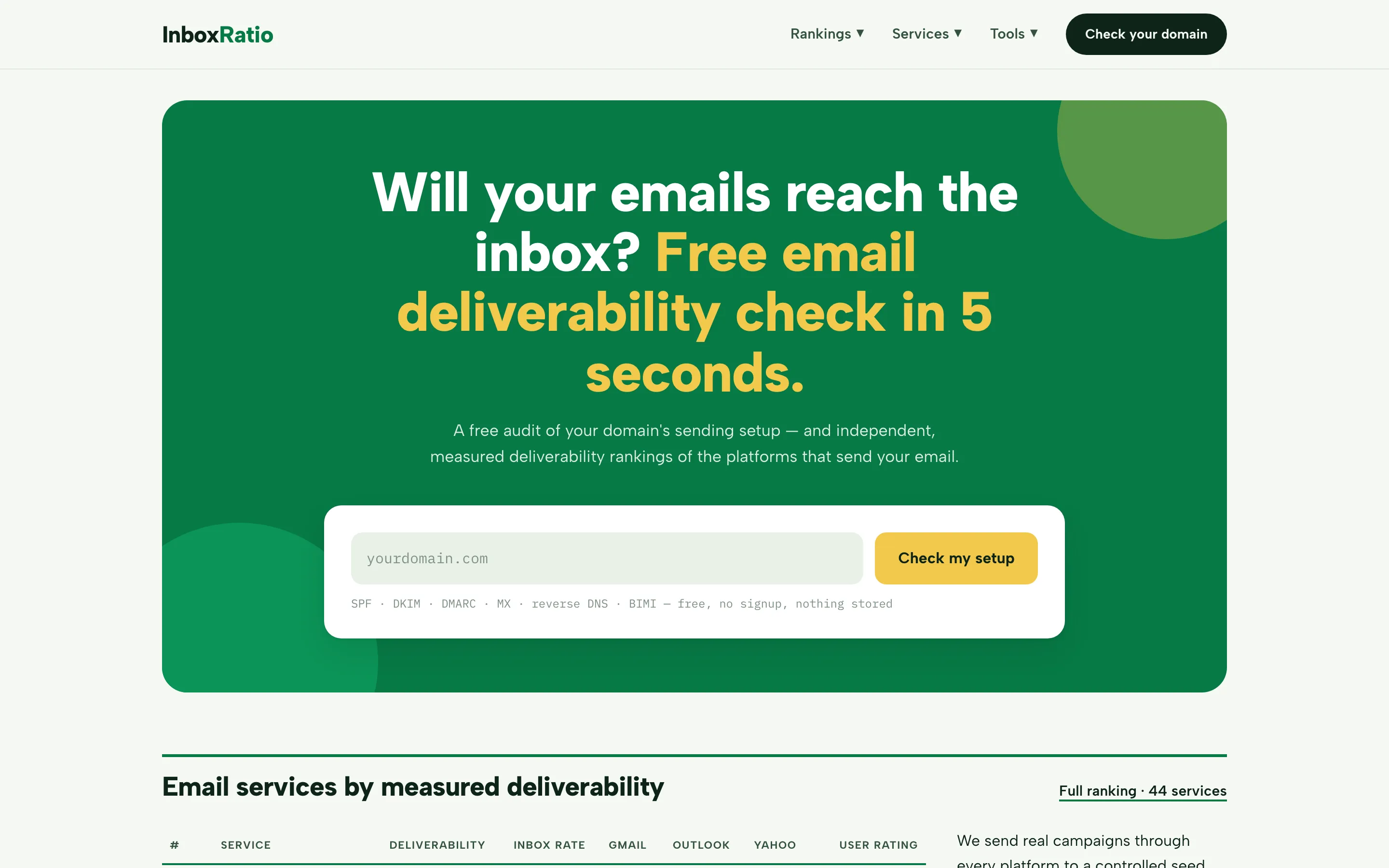
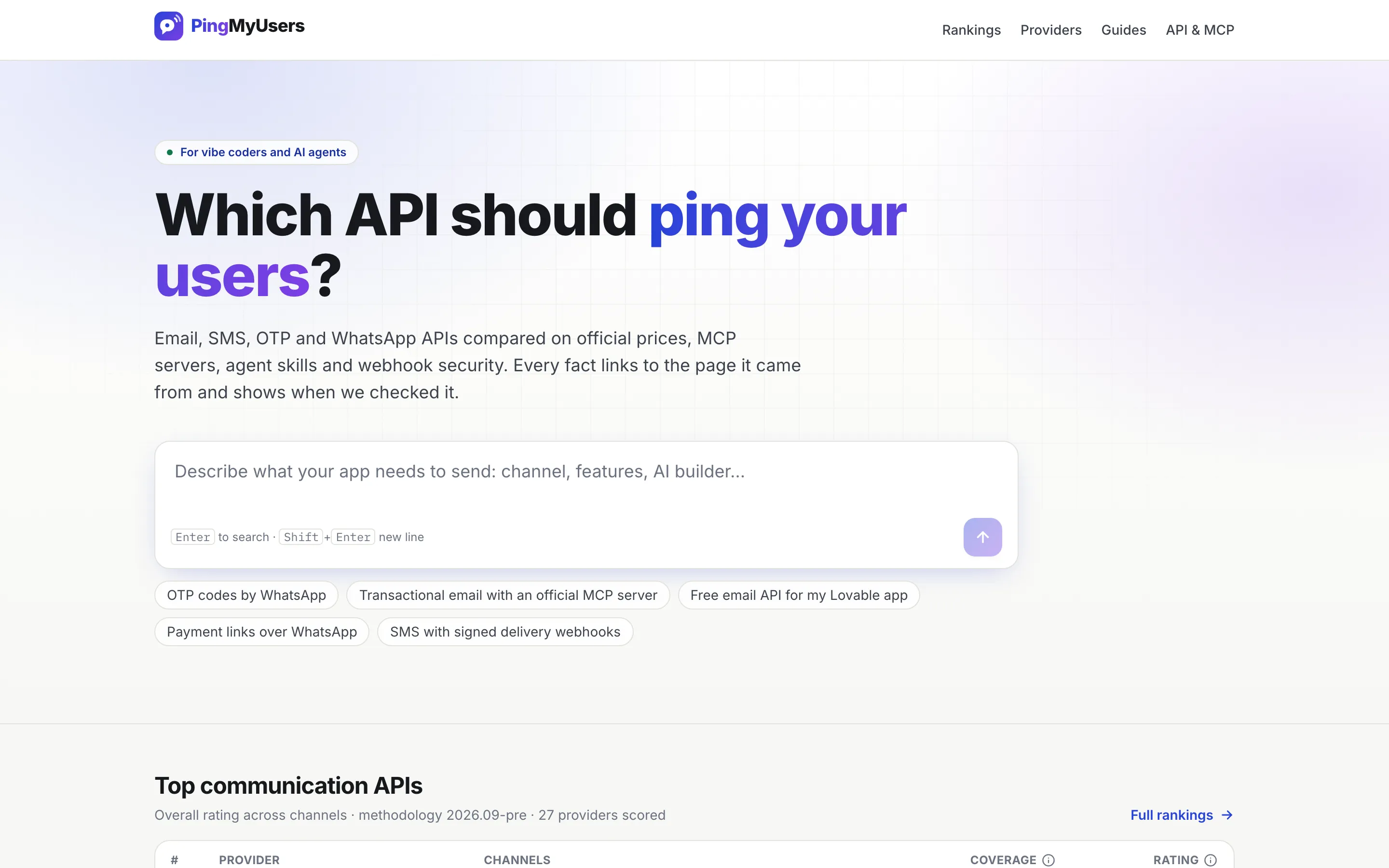
Quality gates instead of launch-day hope. On InboxRatio and PingMyUsers, a production build fails if an internal link breaks, a page’s metadata is invalid or a data file fails its schema, and tests keep every title and description unique. We apply the same approach to client sites, together with Playwright end-to-end tests on the forms and flows that matter and automated accessibility checks against WCAG 2.1 AA.
Search built in. Sitemaps, hreflang, structured data and fast pages ship with the first release. Content strategy and visibility in AI answers belong to our SEO and GEO work.
What usually goes wrong, and how we prevent it
- Content arrives last. Templates designed around placeholder text break when real copy lands. We schedule copy for the key pages before design sign-off, or write it as part of our content work.
- A relaunch without a redirect map. Old URLs that earned links and rankings start returning 404 errors. We crawl the old site, map every URL to its new address and test the redirects on staging.
- Leads nobody sees. Forms that email a shared inbox lose inquiries during holidays and sick leave. Every form is connected to the CRM and tested with a real submission as part of acceptance.
- Tracking that ignores the consent banner. Analytics either fires before consent or not at all. We configure tracking and consent together and check both in the browser before launch.
What drives cost and timeline
| Driver |
Why it changes the effort |
| Page templates |
Each template is designed, built and tested once; ten pages on one template cost less than five unique layouts. |
| Languages |
Every language needs adapted copy, its own SEO metadata and QA. |
| Content |
Writing and photography are often the longest part of the schedule. |
| Integrations |
CRM, booking, newsletter or ERP connections each need mapping and tests. |
| Data-driven pages |
A data model costs more up front and much less per page. |
| Logged-in areas |
Accounts, roles and security turn part of the site into an application. |
| Migration |
Existing content, URLs and redirects must be inventoried and moved. |
We don’t publish a price list, because the same page count can describe very different projects. After a short discovery call we send a fixed-price proposal for a defined scope, or a phased plan when parts of it are still open. Our guide to website costs in Switzerland covers the cost drivers in more depth.
Hosting, data protection and accessibility
Data protection law applies to every form, analytics tool and newsletter sign-up on your site: the revised Swiss Federal Act on Data Protection (FADP), in force since 1 September 2023, for data processed in Switzerland, and the GDPR for visitors in the EU. Your privacy notice has to say which data you collect, why, who processes it and in which countries. We list the processors a site actually uses and agree the hosting location with you: a Swiss data center when contracts or sector rules require it, an EU region otherwise.
On accessibility, Swiss law currently binds mainly public bodies; a revision that would extend obligations to private service providers is before parliament. If you sell online to consumers in the EU, the European Accessibility Act has applied to e-commerce services since 28 June 2025. We build to WCAG 2.1 AA by default, the level referenced by both the Swiss eCH-0059 standard and the EU standard EN 301 549.
How the website connects to the rest of your system
Most of your customer data enters through the website. Forms and bookings feed CRM and sales automation. Newsletter sign-ups start email automation with the consent recorded. Product and order data connect to your online shop or ERP through API integrations. For the whole chain from first click to signed deal, see lead generation.
Why Sensaria
Sensaria AG is a Swiss company in Lugano that builds websites and the systems behind them, so the form, the CRM pipeline it feeds and the report that shows what it produced are designed together. We work in English, Italian, German and French, with companies in Switzerland and abroad. Two sites we built show the approach: InboxRatio, a data-driven reference site with 15 free DNS and email-authentication tools, and PingMyUsers, an editorial site that also publishes a REST API and an MCP server for AI agents.