Email marketing · B2B software research
InboxRatio: an independent benchmark of email services, built from the data model up
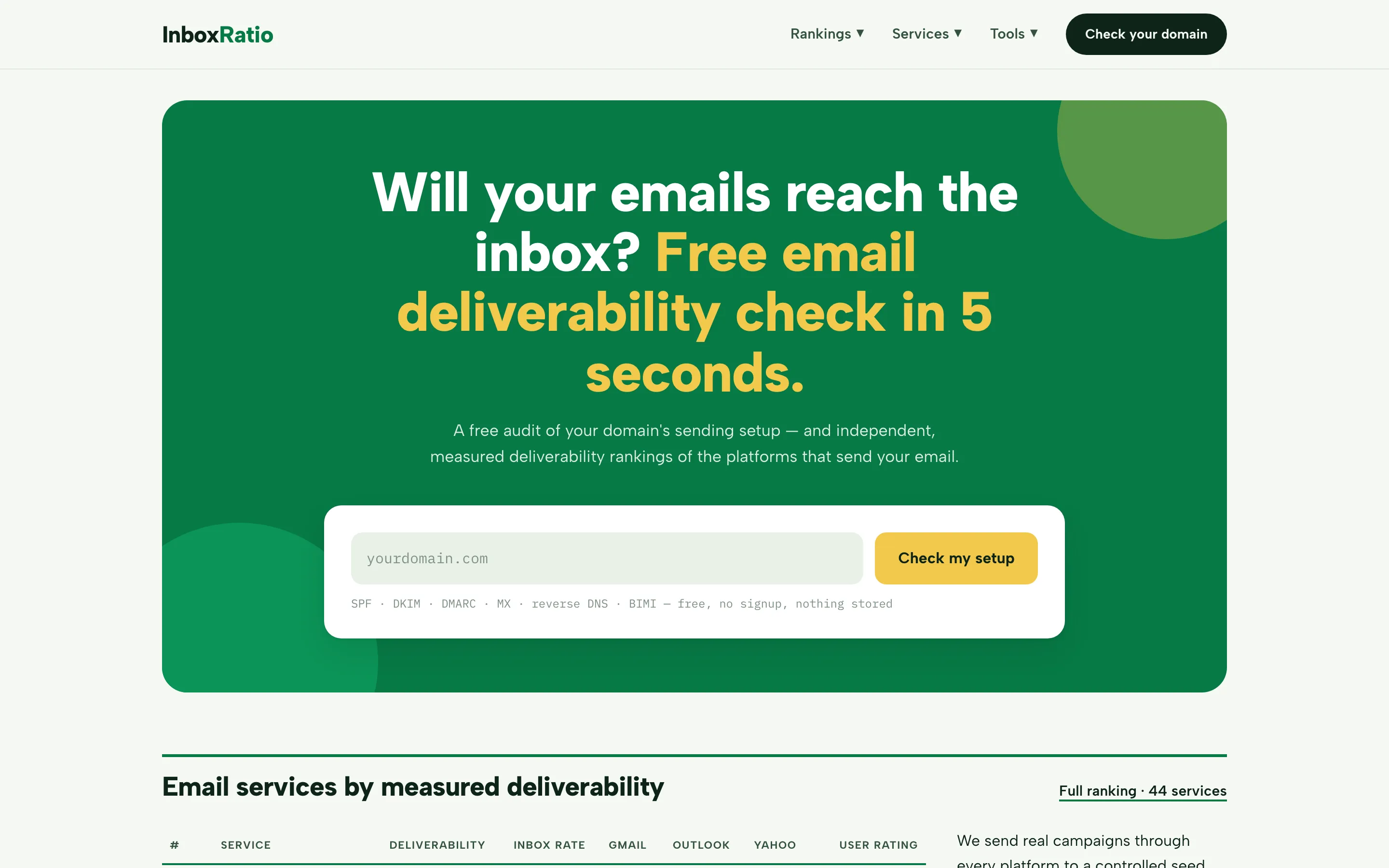
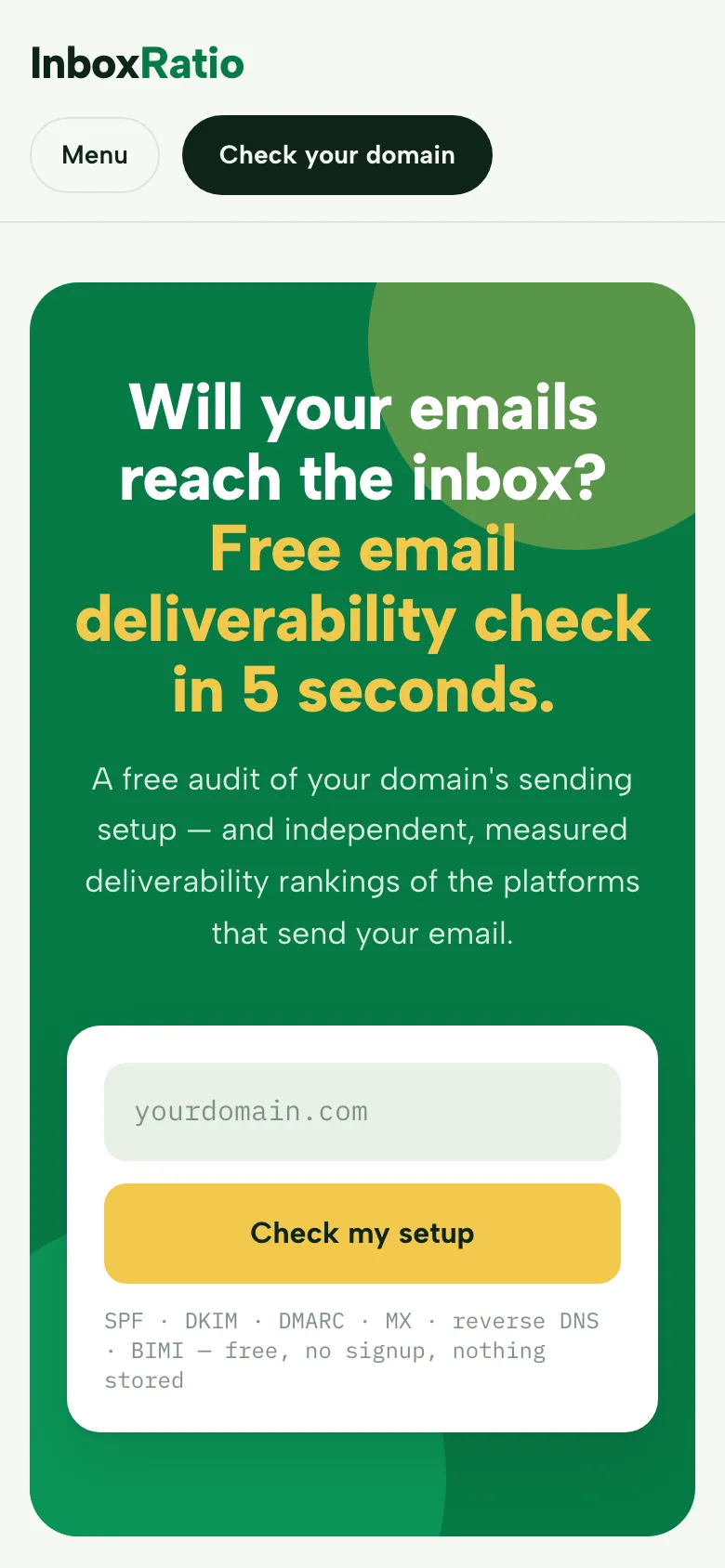
An independent email-deliverability reference site: 44 email services compared on a sourced feature matrix, two scoring engines that never mix, and 15 free DNS and authentication tools.
Visit the live site- Client
- InboxRatio
- Industry
- Email marketing · B2B software research
- Year
- 2026
- 44 email services profiled
- 2,640 sourced feature-matrix cells
- 15 free DNS and authentication tools
- ~440 automated test cases
Challenge
Every email platform says its deliverability is excellent, and most comparison sites retell vendor feature lists. Buyers choosing a marketing or transactional email service need dated, sourced facts and a method that keeps paid features apart from what actually reaches the inbox. Senders also need practical tools to check the DNS records that decide whether their own mail authenticates.
Solution
We designed InboxRatio around its data model first. Provider facts live in git as YAML and CSV, with a source note on every feature-matrix cell, and compile to JSON at build time. Two scoring engines run side by side: a deliverability score computed only from dated inbox-placement snapshots, and a platform score built from a weighted editorial rubric. On top of that sit a catalog, comparisons, pricing hubs, an MDX content system and a suite of free SPF, DKIM, DMARC and DNS tools.
What we delivered
- Information architecture: provider profiles, rankings, category hubs, head-to-head comparisons, pricing hubs, tools, mailbox-provider requirement pages, methodology, blog, glossary and news
- Git-based data model with a source note on each of the 2,640 feature-matrix cells, a multi-volume pricing dataset and append-only test snapshots
- Two separate scoring engines: a versioned deliverability formula and a weighted platform rubric
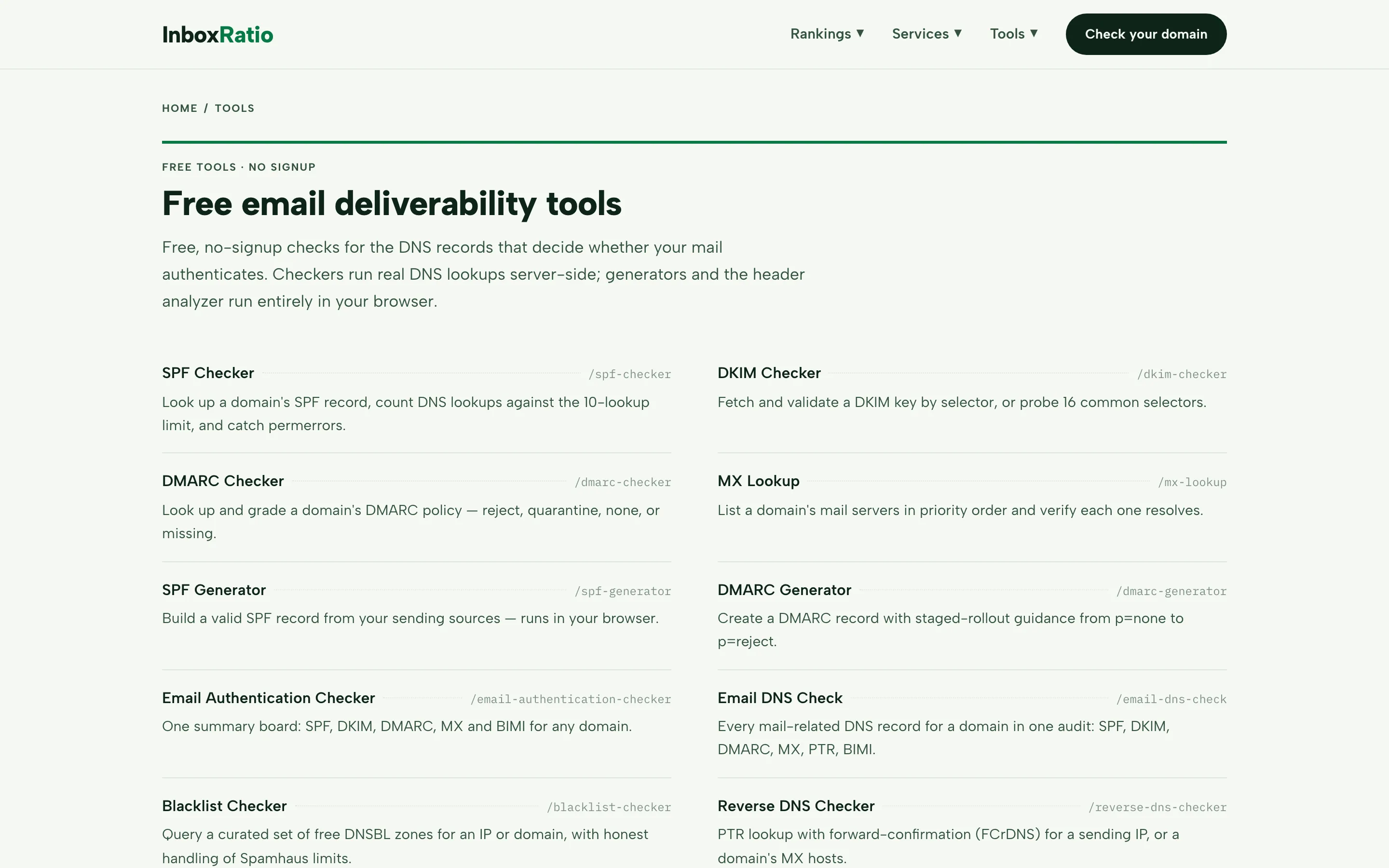
- 15 free deliverability tools, with server-side DNS checkers and browser-only generators
- MDX content system with an editorial calendar and date-gated publishing
- Technical SEO: dynamic sitemap and robots rules, JSON-LD, generated Open Graph cards
- Build gates before every production build and about 440 automated test cases
Functionality
- SPF, DKIM, DMARC and BIMI checkers backed by server-side DNS lookups with per-client rate limiting
- MX lookup, reverse-DNS (FCrDNS) check and DNSBL blacklist check
- SPF and DMARC record generators that run in the browser
- Email header analyzer that runs entirely in the browser
- Full email-DNS audit, authentication summary, deliverability setup score and troubleshooter
- DMARC aggregate-report analyzer
- Deep links that open any tool with the domain already filled in
- Services without a test snapshot show “Not yet tested” instead of an estimated score
- Scheduled pages go live on their publish date through hourly revalidation, without a redeploy
- Newsletter sign-up protected by a honeypot field and rate limiting
Integrations
- Server-side DNS resolution for the checkers
- Public DNSBL zones for the blacklist check
- Dated review-platform rating snapshots (Trustpilot, G2, Capterra)
- Vercel Blob storage for newsletter sign-ups
- Vercel Web Analytics
Technologies
Result
InboxRatio is live on inboxratio.com. It profiles 44 email services in three review tiers and runs 15 free tools. It also publishes 40 blog articles, 46 glossary entries, 8 news items, 5 mailbox-provider requirement pages and 4 methodology pages, with more articles scheduled. Because scores are recomputed from data at build time, a new test snapshot or a price change is a data edit, not a development task.
How the site is put together
InboxRatio has no runtime database. Provider data lives in git as YAML and CSV: a feature matrix of 44 services × 60 features in 9 groups, a pricing dataset across sending volumes, append-only test snapshots, review-rating history, and an AI-readiness dataset that records official MCP servers, agent skills and developer docs for every service. The build compiles it to JSON, so each change is reviewable in a diff and each published value traces back to a dated line in a file.
Two scores that stay apart
Features and pricing say little about whether mail lands in the inbox, so InboxRatio scores them separately. The deliverability score comes only from dated inbox-placement snapshots taken under a controlled seed-list protocol, with a versioned formula. The platform score is a weighted editorial rubric of features, pricing and reputation. User ratings from review platforms appear next to both as context.
Gates before every build
Before each production build, scripts validate frontmatter, audit internal links, recompute and verify every score, run a confidentiality scan and emit the rankings data. Tests also enforce title and description length and uniqueness for every page, so SEO metadata cannot drift as the content grows.
Discuss your project
Tell us about your project